
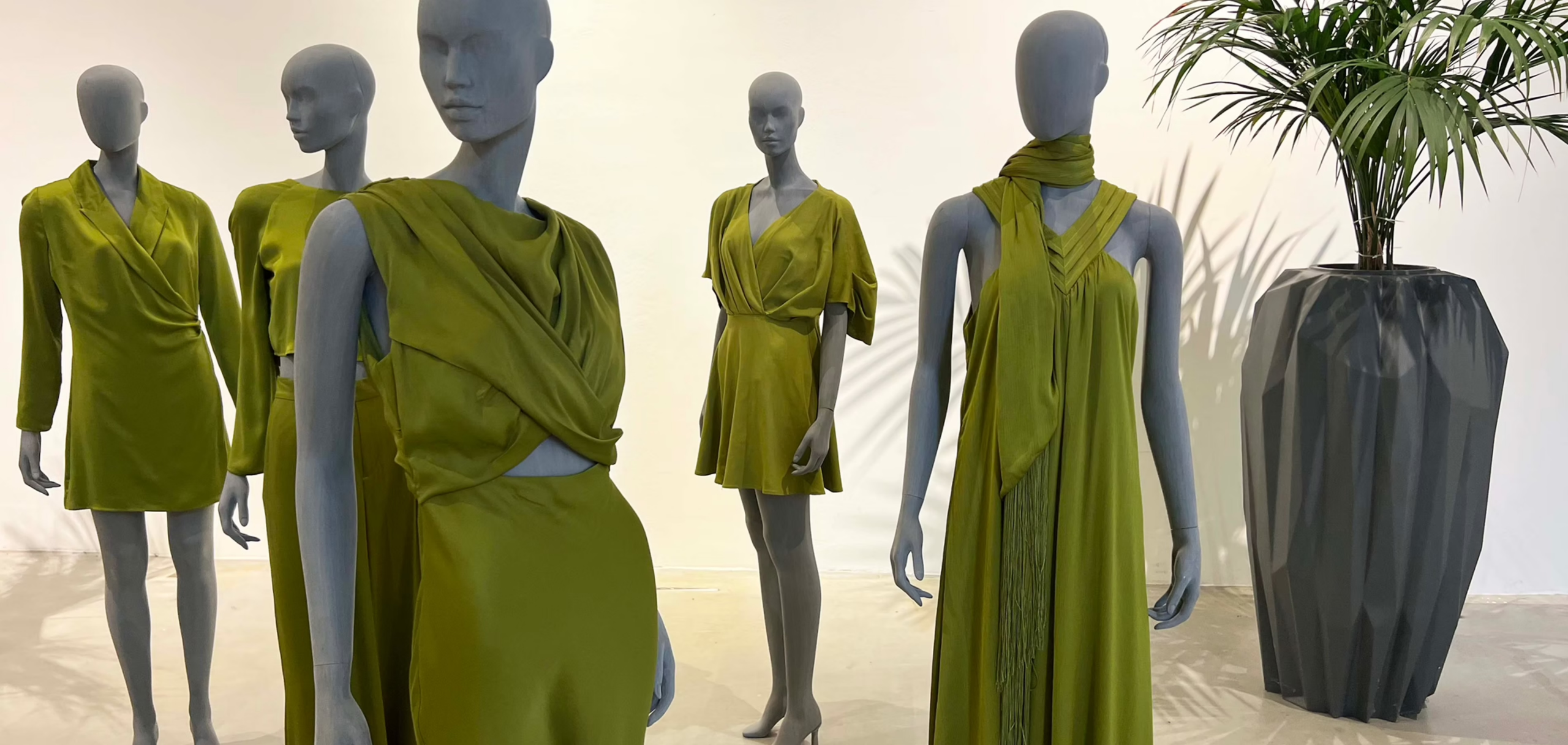

The global fashion industry is changing rapidly. For years, brands focused mainly on the sustainability of the garments themselves: the fabrics, the sourcing, the production process and the supply chain. Today, that same attention is expanding to the physical retail environment.
From store fixtures to packaging and display materials, every element of the modern shop floor is being reconsidered. One item that is often overlooked, but plays a major role in visual merchandising, is the mannequin.
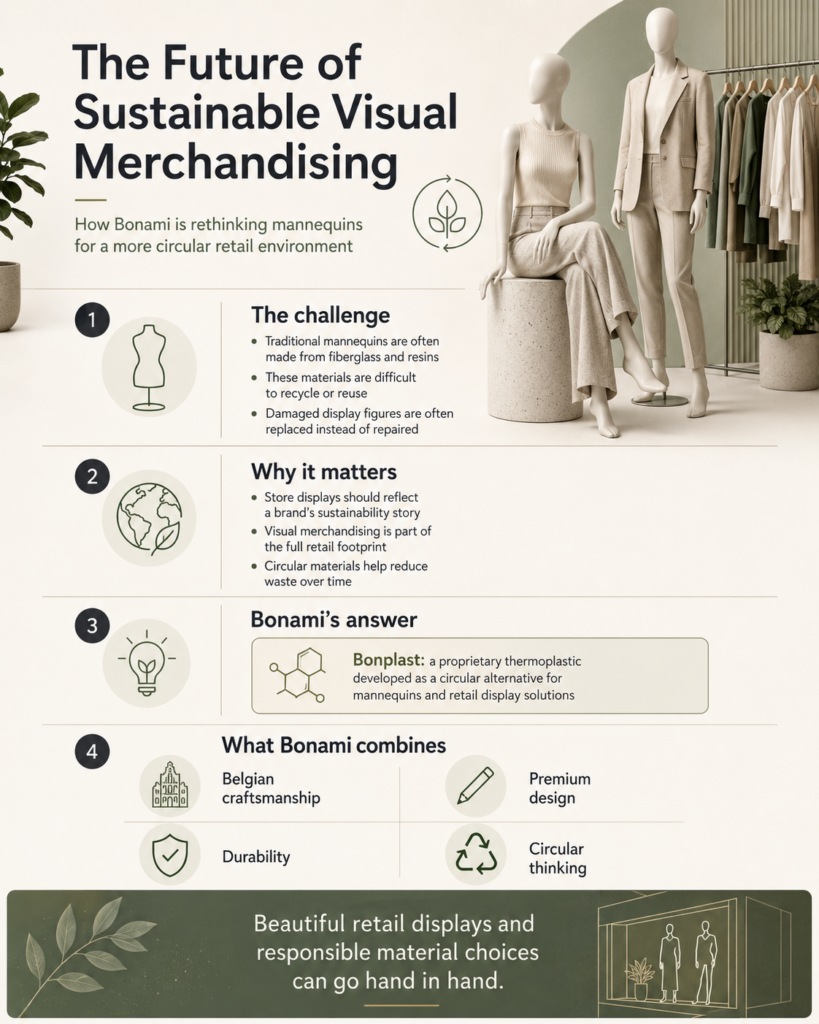
Traditional retail mannequins are often made from materials that are difficult to recycle, repair or reuse. For fashion brands that want to communicate a more conscious and responsible identity, this creates a clear challenge: how do you build an inspiring store environment without relying on outdated, wasteful display solutions?
That is where Bonami comes in.
Based in Aalter, Belgium, Bonami has been designing and producing high-end mannequins and visual merchandising solutions since 1987. By combining Belgian craftsmanship with innovative material development, Bonami helps retailers create premium store displays with a stronger focus on circularity, durability and long-term use.
The hidden sustainability challenge in visual merchandising
Visual merchandising is essential in fashion retail. Mannequins help tell a brand story, show how garments fit and move, and inspire customers to imagine complete looks. But behind that visual impact, there is also a material reality.
For decades, many mannequins in the retail industry have been produced from fiberglass and polyester resins. These materials offer design flexibility and structural strength, but they also come with clear disadvantages.
Fiberglass mannequins are difficult to recycle. When they crack, chip or break, they are often hard to repair in a way that keeps them looking premium. In many cases, damaged mannequins are discarded rather than reused, creating unnecessary waste for retailers and brands.
This becomes especially problematic for fashion companies that are investing heavily in sustainable collections, organic fabrics or circular business models. Presenting responsible clothing on non-circular display materials can create a disconnect between the brand message and the store environment.
Bonami set out to solve that problem by rethinking the mannequin from the material up.
Who is Bonami?
Bonami is a Belgian, family-owned manufacturer of mannequins, busts and visual merchandising solutions. Since 1987, the company has worked with fashion brands, retailers and designers to create display figures that combine aesthetics, functionality and brand identity.
Rather than approaching mannequins as standard retail objects, Bonami treats them as an important part of the overall customer experience. A mannequin should not simply hold clothing. It should support the story of the collection, strengthen the atmosphere of the store and help customers connect with the garments on display.
Bonami’s collections cover a wide range of retail needs, including:
- female and male mannequins
- abstract and realistic mannequins
- kids’ mannequins
- plus-size mannequins
- maternity mannequins
- sports mannequins
- lingerie mannequins
- busts and tailor busts
- custom-made visual merchandising concepts
With in-house sculptors, designers and technical experts, Bonami is able to combine artistic development with practical retail requirements. This balance between design and usability is one of the reasons why the brand has become a trusted partner for fashion retailers across Europe and beyond.
The Bonplast innovation: a circular alternative for retail mannequins
One of Bonami’s most important innovations is Bonplast, a proprietary thermoplastic material developed as an alternative to traditional mannequin materials.
Bonplast was created to support a more circular approach to visual merchandising. Instead of producing mannequins that are difficult to recycle at the end of their life cycle, Bonami developed a material that can be reused, reprocessed and given a new purpose.
This makes Bonplast a strong solution for retailers that want to reduce waste, extend the lifespan of their store fixtures and make more responsible choices in their visual merchandising strategy.
1. A recyclable material composition
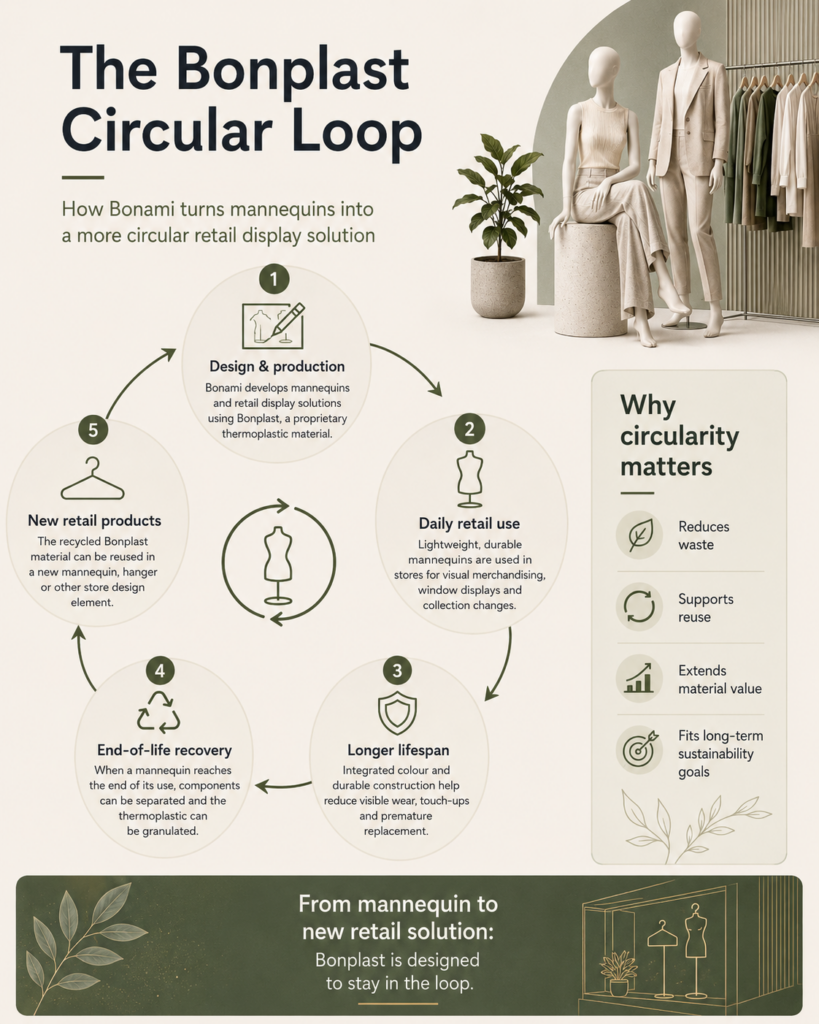
Unlike composite materials such as fiberglass, Bonplast is a thermoplastic. This means it can be melted down and reshaped, making it suitable for recycling and reuse.
When a Bonplast mannequin reaches the end of its life, the material can be granulated and used again. The recycled material can then be transformed into a new mannequin, a clothing hanger or another store design element.
This creates a closed-loop approach in which display materials are not simply discarded, but actively brought back into the production cycle. For retailers and fashion brands, this offers a more future-proof way to manage visual merchandising assets.
2. Colour integrated into the material
Traditional mannequins are often painted after production. In busy retail environments, this surface layer can be damaged by frequent clothing changes, transport, storage or accidental impact. Once the paint chips, the underlying material becomes visible and the mannequin quickly loses its premium appearance.
With Bonplast, the colour is integrated into the material itself. This means the colour runs through the mannequin, rather than sitting only on the surface. As a result, small scratches or signs of use are far less visible, and the mannequin remains visually consistent for longer.
For retailers, this reduces the need for frequent touch-ups, repainting or replacement. It also makes the mannequins more practical for stores where collections change often and displays are regularly updated.
3. Strong performance in different climates
Retail displays are often transported across countries and continents. During shipping and storage, mannequins may be exposed to changing temperatures, humidity and handling conditions.
Bonplast is designed to perform well in different environments, including both warm and cold conditions. This makes it a reliable material for international retailers that need their visual merchandising assets to remain stable, durable and presentation-ready across multiple store locations.
For global fashion brands, that consistency matters. A display concept should look the same in every store, whether it is installed in a flagship boutique, a department store or an international retail chain.
Premium finishes for every retail concept
Sustainability only works in premium retail when the result also looks beautiful. A mannequin still needs to match the atmosphere of the store, the identity of the brand and the visual language of the collection.
Bonami offers a wide range of finishes, allowing retailers to tailor their mannequins to their interior concept and brand identity.
Coloured finishes
Bonami mannequins can be produced in a wide range of colours. From soft, subtle tones to bold brand colours, coloured mannequins allow retailers to create a display concept that feels unique and recognisable.
Raw finishes
For brands with a minimal, architectural or industrial store concept, raw finishes offer a refined and contemporary look. These finishes highlight the material itself and create a clean, understated visual effect.
Fabric-covered mannequins
Fabric-covered mannequins and tailor busts are ideal for high-end fashion, tailoring, bridalwear and couture environments. They offer a softer, more tactile appearance and bring a classic sense of craftsmanship to the display.
Transparent and translucent finishes
Transparent and translucent mannequins create a modern, light-driven effect. They work especially well in window displays, concept stores and retail spaces where lighting plays an important role in the overall experience.
Make-up, wigs and realistic detailing
For brands that want a more lifelike presentation, Bonami also offers mannequins with make-up, wigs and detailed facial features. These options help create a more expressive visual story and are especially useful for collections where emotion, lifestyle and identity are central to the brand experience.
Designed for daily use in retail environments
A mannequin should not only look good. It also needs to be practical for the people who work with it every day.
Visual merchandisers and store teams regularly dress, move, lift and reposition mannequins. If a mannequin is too heavy, difficult to assemble or easily damaged, it slows down the team and increases the risk of wear and tear.
Bonami’s mannequins are designed with these daily retail realities in mind.
Lightweight and easier to handle
Bonplast mannequins are lightweight compared to many traditional alternatives. This makes them easier to move, dress and position in-store.
For retail teams, this improves efficiency during collection changes, window updates and seasonal displays. It also reduces physical strain for store associates who regularly handle mannequins as part of their daily work.
A lighter mannequin can also contribute to more efficient transport and logistics, especially when larger quantities are shipped to multiple store locations.
Smart magnetic systems
Many Bonami mannequins are equipped with practical magnetic systems that make dressing and assembly easier. Instead of struggling with stiff joints, screws or complicated attachments, store teams can work more quickly and intuitively.
Removable parts, magnetic connections and well-designed fittings help make the dressing process smoother, even for tight garments, layered looks or outfits with shoes and accessories.
This practical engineering is an important part of Bonami’s approach. A sustainable mannequin should not only be better for the environment; it should also make life easier for the people using it.
Beyond mannequins: sustainable Bonplast hangers
Bonami’s circular thinking does not stop with mannequins. The company also uses Bonplast to produce durable, high-quality hangers.
In many retail environments, hangers are replaced frequently due to breakage, wear or changing store concepts. Bonami’s Bonplast hangers are designed to be strong, long-lasting and recyclable, offering a more sustainable alternative to disposable plastic or traditional wooden hangers.
They can also be customised in different colours, including RAL or Pantone shades, allowing retailers to align their hangers with their full store concept.
For brands that want a more consistent and sustainable retail environment, this creates an opportunity to think beyond individual display pieces and move towards a more holistic visual merchandising strategy.
Why sustainable visual merchandising matters for fashion brands
Sustainability is no longer limited to the product label. Customers, partners and stakeholders increasingly expect brands to take responsibility for the full retail experience.
That includes the materials used in stores, the lifespan of display fixtures and the way visual merchandising assets are managed at the end of their use.
By choosing more sustainable mannequins and display solutions, retailers can support several important goals:
- reducing unnecessary waste
- extending the lifespan of retail display materials
- creating a more consistent sustainability story
- supporting circular design principles
- improving the daily usability of visual merchandising tools
- aligning store design with responsible brand values
For fashion brands, this can strengthen both operational efficiency and brand perception. A store environment that reflects the same values as the collection creates a more coherent and credible customer experience.
Belgian craftsmanship with an international vision
Bonami’s strength lies in the combination of Belgian craftsmanship, technical innovation and retail expertise.
The company has decades of experience in designing mannequins that meet the visual standards of premium fashion brands. At the same time, its work with Bonplast shows a clear commitment to rethinking how mannequins are produced, used and recycled.
This makes Bonami a strong partner for retailers that want to invest in visual merchandising solutions that are not only beautiful, but also durable, practical and more responsible.
The future of visual merchandising is circular
Retail is evolving. Fashion brands are being challenged to think more carefully about every material choice they make, from the garments they sell to the displays they use to present them.
Mannequins may seem like a small part of the store environment, but they play a highly visible role in the way customers experience a brand. Choosing sustainable mannequins is therefore more than a practical decision. It is a statement about the future of retail design.
With Bonplast, Bonami offers a circular alternative to traditional mannequin materials. By combining recyclability, durability, premium finishes and everyday usability, Bonami helps brands create store displays that are both visually powerful and more responsible.
Beautiful visual merchandising and sustainable thinking no longer need to be separate goals. With the right materials, design approach and manufacturing partner, they can strengthen each other.
Looking for sustainable mannequins for your store?
Bonami helps fashion brands and retailers create premium visual merchandising solutions with a stronger focus on quality, durability and circular design.
Whether you need a full mannequin collection, custom-made display figures, tailor busts or sustainable Bonplast hangers, our team can help you find the right solution for your brand and retail environment.
Get in touch with Bonami to discover how sustainable mannequins can elevate your store concept and support your long-term brand strategy.