
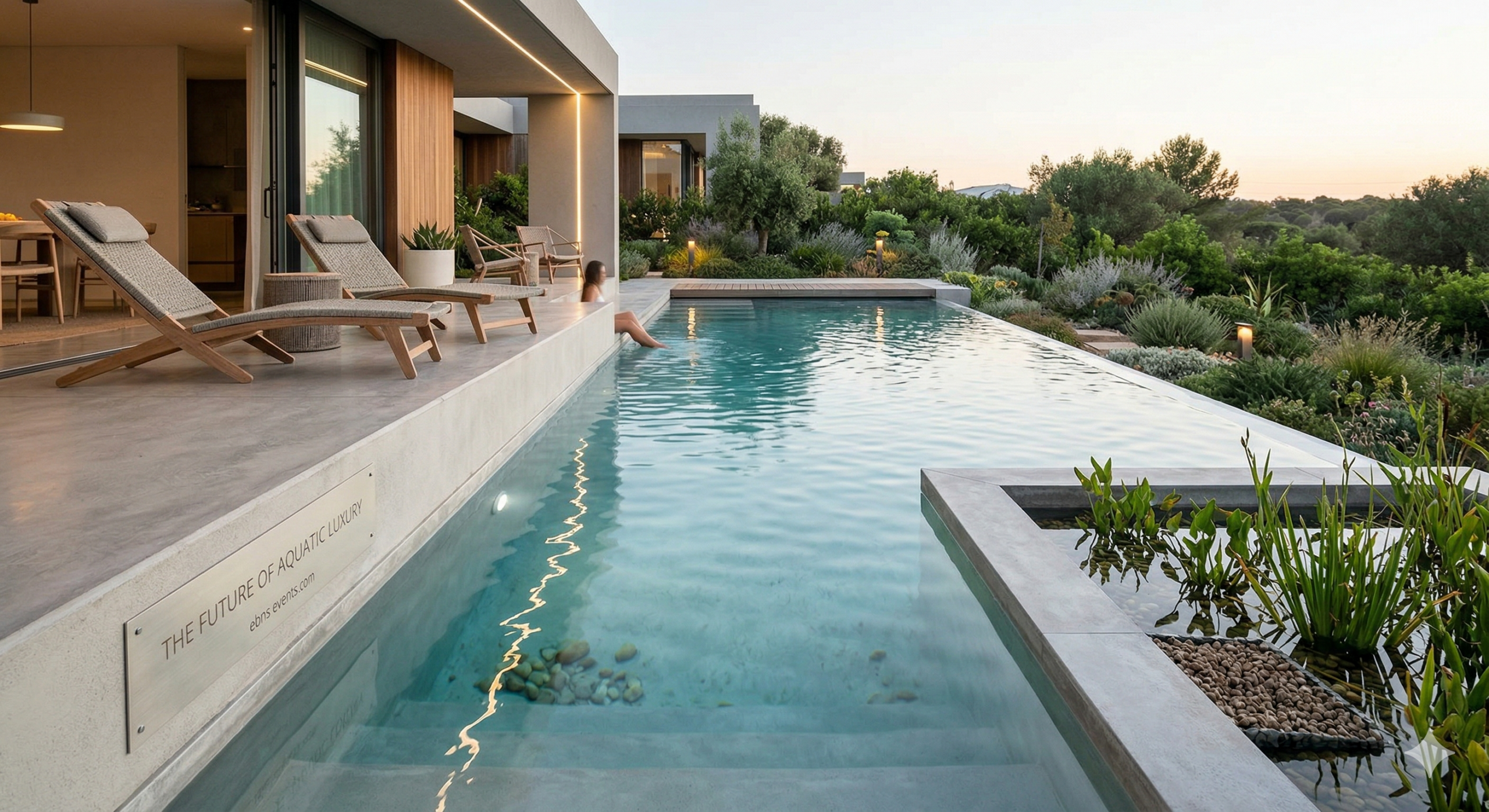

The swimming pool industry is undergoing a quiet but profound revolution. For decades, the crystal-clear blue of a luxury pool was synonymous with heavy chemical maintenance and high energy consumption.
Today, the narrative has shifted. Driven by environmental consciousness and a growing demand for wellness, the industry is pivoting toward “living water”—systems that prioritize ecological balance without sacrificing the sleek, high-end aesthetics modern homeowners crave.
At the heart of this transformation is a move away from traditional chlorine and toward sustainable, natural filtration.
The shift toward sustainable pool architecture
Sustainability in pool construction is no longer a niche preference; it is a hallmark of quality. Modern pool builders are rethinking the entire lifecycle of a pool, from the materials used in the basin to the way the water is heated.
True sustainability in this sector rests on three pillars:
- Thermal Efficiency: Utilizing advanced slatted covers that act as solar collectors and high-performance heat pumps.
- Longevity: Choosing materials like high-grade stainless steel or natural stone that resist wear and tear for decades.
- Water Conservation: Implementing smart filtration systems that reduce the frequency of water changes and minimize backwashing waste.
Moving beyond chlorine: the rise of natural filtration
One of the most significant trends discussed at industry events today is the reduction—or total elimination—of chlorine. While chlorine has been the gold standard for sanitation since the mid-20th century, its drawbacks are well-known: the distinct smell, skin and eye irritation, and the environmental impact of chemical runoff.
One of the leading companies that does this very well is a Belgian company, Fou D’eau. As part of the Poolgroup they manufacture and place their environmentally friendly pools, pushing back against chemical substances like chlorine.
Bio-mechanical filtration
The modern “natural pool” or “bio-pool” has evolved far beyond the pond-like aesthetics of the past. We now see hybrid systems that combine the visual appeal of a sleek, architectural infinity pool with the biological power of a natural ecosystem.
These systems use bio-filters and phosphate binders to keep the water pure. By circulating water through specialized substrate zones or using advanced UV-C and ozone treatments, builders can achieve drinking-water quality without a single drop of traditional chlorine.
The wellness advantage
The move toward chlorine-free water is deeply tied to the wellness movement. Swimming in natural, chemically-balanced water is a different sensory experience. It feels “softer” on the skin, lacks the harsh chemical odors, and aligns with a holistic approach to health. For the high-end market, this “naked water” experience is becoming the ultimate luxury.
Economic and environmental synergy
There is a common misconception that sustainable pools are purely an idealistic choice. In reality, the transition to green technology is an economic one. Variable-speed pumps and intelligent automation systems significantly lower electricity bills. Meanwhile, natural filtration systems often require less long-term expenditure on chemical supplies, even if the initial investment in biological infrastructure is higher.
Furthermore, as European regulations regarding water usage and chemical discharge become stricter, investing in sustainable pool technology is a way of “future-proofing” an asset.
Conclusion: a new standard for EBNS events
As we look toward the future of outdoor living, the integration of nature and technology is inevitable. The pool industry is no longer just building basins; it is crafting sustainable ecosystems that enhance both the property’s value and the user’s well-being.